Please fill in the fields to search in more detail.
You might think that plush automotive carpet is the gold standard for every interior, but for many Australian drivers, it's actually the fastest way to ruin a vehicle's resale value. It's incredibly frustrating to spend your weekend scrubbing dried mud out of deep fibres or trying to mask that damp smell after a beach trip. You want a cabin that looks professional and stays quiet, but the wrong material choice makes maintenance a constant battle. When weighing up car carpet vs vinyl flooring, the right answer depends entirely on whether your vehicle is a weekend cruiser or a hard-working 4x4.
We understand that your floor covering needs to do more than just look good. It has to insulate against road noise and withstand the harsh local climate. Discover the definitive comparison between automotive carpet and heavy-duty vinyl to choose the perfect floor covering for your lifestyle, vehicle type, and maintenance needs. We'll break down the technical differences in durability, acoustic performance, and ease of cleaning. Whether you're restoring a classic or kitting out a new ute, this guide ensures your interior remains a functional, high-quality space for years to come.
Your daily routine dictates which material belongs on your vehicle's floor. Choosing between car carpet vs vinyl flooring isn't just a matter of interior styling. It's a practical decision that affects how you maintain your vehicle and how it feels to drive. Both options serve as full-floor replacements. They cover the entire metal floor pan from the firewall through to the rear seats or boot, providing a complete barrier against the elements. While one offers a refined, comfortable atmosphere, the other provides a rugged, industrial surface built for the toughest Australian conditions.
Fitment is everything. The most critical feature for any replacement kit is a custom-moulded shape. Unlike flat, universal mats that slide around, a kit from Tru-Fit Carpets by Vision Auto is heat-pressed to match the exact contours of your specific make and model. This precision is vital for safety because it prevents the material from bunching up under your pedals. It also ensures a professional, factory-spec appearance. For most owners, the lifestyle fit is the primary deciding factor. If your vehicle spends its time on the school run or commuting, carpet is usually the winner. If you're frequently dealing with mud, grease, or sand, vinyl is the logical choice.
Modern automotive carpet is typically a synthetic blend of nylon or polypropylene. These materials are chosen for their ability to resist UV fading and heavy foot traffic. The secret to a high-quality kit lies in the backing material. This secondary layer allows the carpet to hold its shape permanently after we mould it in our Pakenham factory. Tru-Fit Carpets by Vision Auto maintains this standard to ensure carpet remains the preferred choice for passenger comfort and a soft, tactile feel. When researching Vehicle Mat Materials, you'll find that carpet is often favoured for its ability to trap fine dust and provide a premium finish in family cars or restored classics.
Heavy-duty vinyl is an industrial-grade PVC product engineered for maximum durability. It's the go-to choice for Australian tradies, 4x4 enthusiasts, and commercial fleet owners. While many people talk about "hosing out" a vinyl interior, it's a bit of a myth. You can certainly wipe it down with a damp rag or mop up spills easily, but you shouldn't literally stick a garden hose inside your cabin. Water can still find its way into electrical components or under the edges of the flooring if you aren't careful. Vinyl is perfect for vehicles that see constant mud, sand, or grease. It offers a rugged surface that won't absorb liquids or odours. Choosing between car carpet vs vinyl flooring ultimately comes down to whether you prioritise a plush cabin or a floor that you can clean with a quick wipe-down after a day on the tracks.
The interior environment of your vehicle is defined by the surface beneath your feet. When comparing car carpet vs vinyl flooring, you're choosing between two distinct atmospheres. Carpet offers a traditional, plush finish that absorbs light and softens the cabin's appearance. Vinyl, by contrast, provides a clean, functional look that suggests the vehicle is ready for work or adventure. The tactile comfort for passengers is significantly different; carpet feels warm and inviting, while vinyl is firm and cool to the touch. This sensory experience is often the first thing a passenger or prospective buyer notices when they step inside.
Colour choice plays a massive role in setting the tone. Tru-Fit Carpets by Vision Auto offers a range of shades including classic Black and Grey, alongside more specific tones like Desert Sand and Cerulean. These options allow you to match your flooring to the Lifecycle of Car Mat Materials and the existing interior trim of your vehicle. Choosing a colour that complements your dash mats and door cards creates a cohesive, professional look. This attention to detail can actually boost your vehicle's resale value, provided the material matches the vehicle's primary use. A luxury sedan with a vinyl floor feels out of place, just as a carpeted work ute can seem impractical to a buyer.
Carpet is the essential finishing touch for any classic car restoration. It creates a sense of cabin warmth that vinyl simply cannot replicate. In a passenger car, the psychological impact of a soft floor covering makes the interior feel more like a living space than a machine. We ensure our textures match original factory specifications, allowing restorers to maintain the authentic feel of their vehicle while enjoying the benefits of modern, hard-wearing synthetic fibres. If you want a cabin that feels premium and refined, carpet is the undisputed choice.
For the modern 4x4 or commercial ute, vinyl flooring is the gold standard for a utilitarian aesthetic. It matches the hard-wearing plastics of a modern dashboard and provides a seamless look from the footwell to the rear wall. Fleet owners and commercial operators prefer vinyl because it projects an image of efficiency and cleanliness. It looks professional even after a long day on a dusty job site. If you are looking for the best of both worlds, you can view the range at Tru-Fit Carpets by Vision Auto to find a material that suits your specific vehicle's identity.
Australia's environment is brutal on vehicle interiors. Whether it's fine red dust from the outback or salty sand from the coast, your flooring material determines how much of the outdoors stays inside your cabin. When comparing car carpet vs vinyl flooring, the way each material interacts with debris is the biggest differentiator. Carpet fibres act like a filter. They trap fine dust and prevent it from swirling around the cabin while you're driving. However, once that sand is embedded deep in the pile, it requires a high-powered vacuum and significant effort to remove. Vinyl allows debris to sit right on the surface. This makes it much easier to sweep out but can lead to a "gritty" feel underfoot if you don't stay on top of the cleaning.
For dog owners, the choice is usually clear. Pet hair is notoriously difficult to extract from automotive carpet, as the fur weaves itself into the synthetic loops. Vinyl is completely impervious to claws and won't absorb the "wet dog" smell that often lingers in fabric after a trip to the beach. If your 4x4 or ute frequently hauls pets or messy gear, the smooth surface of a moulded vinyl floor will save you hours of detailing time over the life of the vehicle.
The "vacuuming vs wiping" debate is a matter of time management. Cleaning a vinyl floor is a simple process of using a damp cloth and a mild detergent. It's ideal for tradies who get in and out with muddy boots. However, you must be mindful of "hidden" moisture. While vinyl is waterproof, water can still seep around the edges or through bolt holes if you're too aggressive with a hose. Water trapped under a non-breathable vinyl layer is a primary cause of floor pan rust. Carpet is more forgiving with minor spills as it allows for some evaporation, but it requires specialized cleaners to treat stains from coffee, grease, or mud without leaving a permanent mark.
Our harsh UV levels can degrade interior materials quickly. We manufacture our kits to resist fading, but the physical properties of the materials react differently to heat. According to a recent automotive flooring market report, carpet remains a dominant choice in the passenger sector because it provides better cushioning and handles temperature fluctuations well without losing its shape. Vinyl is incredibly resistant to abrasion from heavy work boots, but extreme cabin heat can occasionally make lower-quality PVC kits feel "tacky." Our heavy-duty moulded vinyl is engineered to maintain its flexibility and precision fit even after years of exposure to the Aussie sun.
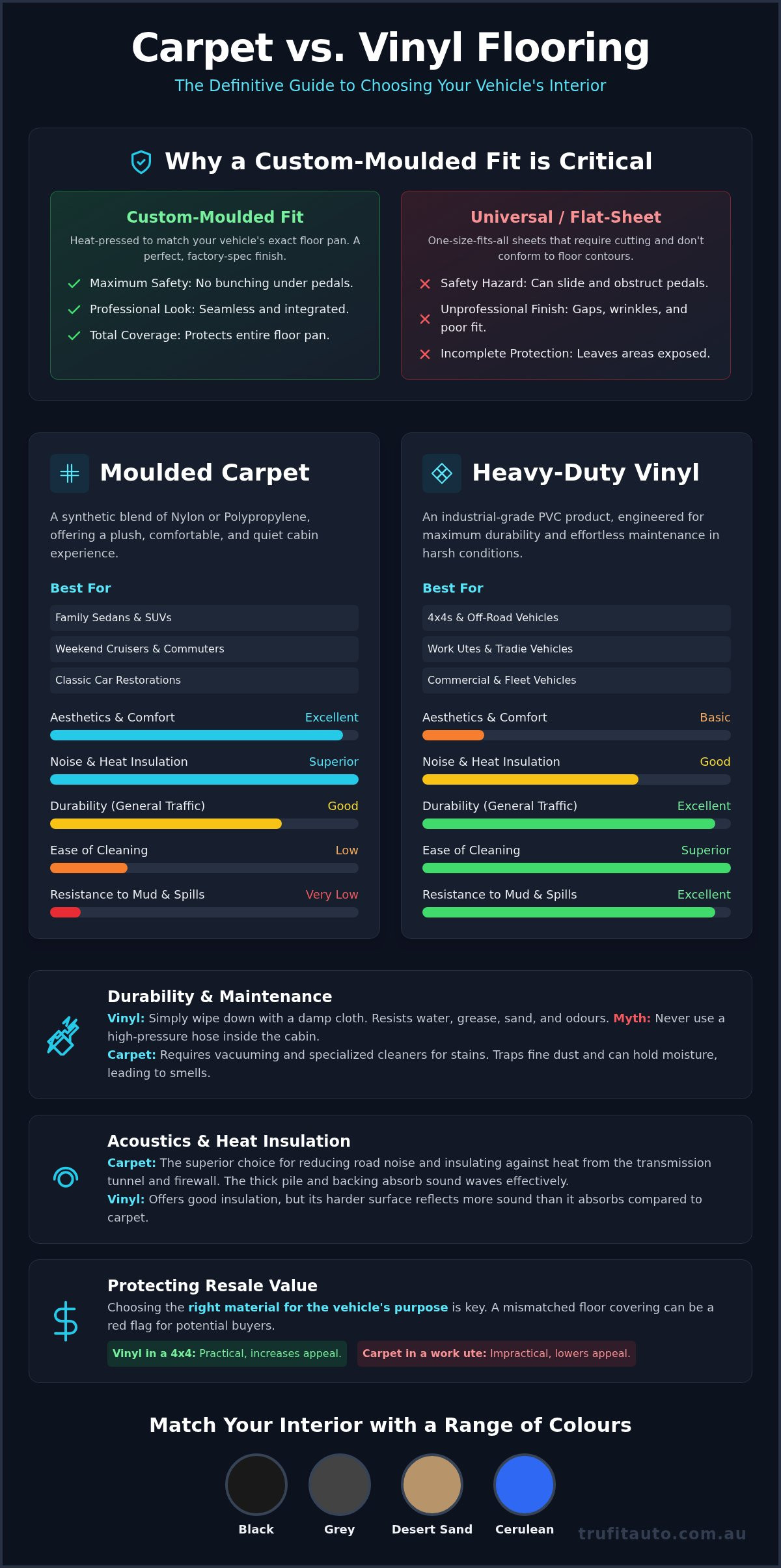
Driving a 4x4 for six hours on the highway shouldn't feel like sitting inside a drum. When you compare car carpet vs vinyl flooring, the most immediate difference is how the cabin handles road noise and engine vibration. Carpet is naturally better at absorbing high-frequency sounds. The synthetic loops break up sound waves, preventing them from echoing off the floor pan and into your ears. In contrast, vinyl is a dense, non-porous sheet. While it's excellent for durability, it tends to reflect sound back into the cabin, which can lead to a louder, more fatiguing driving experience if not handled correctly.
Thermal insulation is just as important as acoustics in the Australian climate. Exhaust systems and transmission tunnels radiate significant heat through the metal floor pan, especially during long summer trips. Carpet provides a natural thermal break that helps keep the cabin cooler. Vinyl, being a thinner and more conductive material, requires additional support to manage these temperatures effectively. Achieving a professional result means thinking about your flooring as a complete system rather than just a single layer of material.
Hard surfaces like industrial PVC are excellent at reflecting noise. In a large van or an empty ute cab, this creates a hollow, echoing sound that amplifies every pebble hitting the underbody. Common noise entry points include the firewall, where engine roar enters, and the wheel arches, where tyre hum is loudest. Acoustic underlay is the essential partner for vinyl flooring because it provides the absorption that the PVC layer lacks. Without this secondary layer, a vinyl-floored vehicle often suffers from a "tin can" effect that makes conversation difficult at highway speeds.
You don't have to sacrifice a quiet cabin just because you want the durability of vinyl. The solution is layering. By installing a layer of vibration-dampening material directly onto the metal floor before laying your moulded kit, you can stop the metal from resonating. Adding a secondary layer of insulation creates a multi-layer barrier that blocks both noise and transmission tunnel heat. This approach allows you to achieve a "luxury car" quietness level even in a rugged work vehicle. If you're planning a full interior overhaul, you can explore our automotive soundproofing range to complement your new flooring.
Selecting between car carpet vs vinyl flooring comes down to your vehicle's primary mission. If you're restoring a classic Holden or upgrading a family SUV, moulded carpet provides the acoustic comfort and premium finish you need. For those driving a hard-working ute or a dedicated 4x4, heavy-duty vinyl is the superior choice for managing mud, sand, and spills. Tru-Fit Carpets by Vision Auto provides both materials, allowing us to offer unbiased advice based on your specific lifestyle. We've spent decades refining our manufacturing processes in Pakenham, Victoria, to ensure every kit meets the highest standards of durability and fitment.
Your decision should balance the need for cabin quietness against the reality of your maintenance routine. Carpet is the winner for comfort. Vinyl is the undisputed champion of utility. Regardless of which material you choose, the quality of the fitment determines the longevity of the installation. A kit that doesn't fit correctly will wear prematurely at the high points and trap moisture in the low points. Choosing an Australian-made, custom-moulded solution ensures your interior remains protected for the long haul.
We manufacture our kits using a precision heat-pressing process that ensures a perfect fit for hundreds of Australian vehicle models. There is a significant difference between "moulded-to-shape" and "flat" flooring. Flat sheets require dangerous cutting and stretching, which often leads to the material bunching or lifting. Our moulded kits follow the exact contours of your floor pan, from the transmission tunnel to the kick panels. This precision is a critical safety feature. It prevents the flooring from shifting and interfering with your pedals, ensuring a safe driving experience every time you get behind the wheel.
The first step is identifying your exact vehicle model, including the year, cab type, and transmission. Once you've settled the car carpet vs vinyl flooring debate, you can select from our wide colour range. Tru-Fit Carpets by Vision Auto offers everything from standard Black and Grey to specialized tones like Desert Sand, Cerulean, and Dark Green. It's also the perfect time to think about your cabin acoustics. We highly recommend purchasing an integrated soundproofing or underlay kit at the same time to maximize your results. You can Shop our range of Moulded Vinyl Flooring online to get started. If you prefer the comfort of fabric, you can Browse Tru-Fit Carpets by Vision Auto's Full Range of Moulded Carpets to find the perfect match for your vehicle.
Deciding on car carpet vs vinyl flooring is a strategic choice that balances daily comfort against long-term maintenance. If you value a quiet, plush cabin for family trips, carpet is the ideal solution. For those tackling mud and sand in a work ute or 4x4, heavy-duty vinyl offers unmatched durability and ease of cleaning. Regardless of your choice, a custom-moulded fit is essential to ensure safety and a factory-spec finish that won't shift underfoot.
Tru-Fit Automotive Products brings over 30 years of automotive expertise to every project. We manufacture our kits in Pakenham, Victoria, and offer custom-moulded solutions for over 1,000 different vehicle models. This local manufacturing ensures your flooring can withstand the unique demands of the Australian environment while providing a perfect fit. Don't settle for universal mats that slide or bunch up. Take the next step toward a cleaner, quieter, and more professional cabin today.
Upgrade Your Interior with Tru-Fit Moulded Flooring and experience the difference that precision engineering makes to your drive.
Vinyl is generally the more cost-effective choice for a full-floor replacement kit. While the initial purchase price is often lower than plush carpet, the real value is found in its long-term durability. It withstands heavy-duty use in work environments much better, which reduces the need for frequent replacements. You also save money on professional detailing because you won't need specialized steam cleaning to remove deep-seated dirt or stubborn stains.
You can install a Tru-Fit moulded kit yourself if you have basic mechanical skills and standard hand tools. Since our kits are heat-pressed to match your vehicle's specific contours in our Pakenham factory, the difficult shaping work is already finished. You'll need to remove the seats and trim, then carefully trim the edges of the new material for a perfect fit. Most customers find it a straightforward and rewarding DIY weekend project.
Vinyl can feel warmer to the touch when the vehicle is parked in direct sunlight, but it doesn't significantly increase the overall cabin temperature. Because it's a thinner material than carpet, it can transfer more heat from the transmission tunnel into the cabin. We recommend installing a layer of thermal insulation or soundproofing underneath your vinyl. This combination blocks radiant heat effectively, ensuring your interior stays cool during long Australian summer drives.
Vinyl is the superior choice for any 4x4 that frequently visits the coast. Sand is incredibly abrasive and becomes embedded deep within carpet fibres, making it nearly impossible to remove with a standard vacuum. Vinyl allows you to simply sweep or wipe the sand away after your trip. It also won't absorb salt water or develop the musty, damp smells that often plague carpeted interiors after a weekend at the beach.
The best way to clean your vinyl floor is with a damp cloth and a mild detergent. You should never use a garden hose inside the cabin. Water can easily seep through bolt holes or around the edges, collecting on the metal floor pan and causing rust. If you have a major spill, wipe it up immediately. A precision-moulded fit helps prevent liquids from reaching the edges, but keeping the surface dry is the best protection.
Replacing an old, worn floor covering with a new moulded kit will noticeably reduce road noise. When comparing car carpet vs vinyl flooring for acoustics, carpet is the natural winner because its fibres absorb high-frequency sounds. To achieve the quietest possible cabin, we suggest adding an integrated soundproofing layer during the installation. This helps dampen vibrations from the road and engine, creating a much more refined driving experience for everyone.
We provide a diverse range of colours designed to suit both classic and modern Australian vehicles. Our selection includes traditional Black and Grey alongside specialized tones like Desert Sand, Cerulean, and Dark Green. This variety allows restorers to match original factory interiors or create a unique custom look. Because our kits are moulded for specific makes and models, you get an authentic appearance that respects the heritage of your classic car restoration.
You can place carpet mats on top of a vinyl floor, but you must ensure they are properly secured. Because vinyl is a smooth surface, standard mats may slide around during driving, which can be dangerous if they interfere with the pedals. We recommend using mats with a high-grip, non-slip backing or using floor clips to keep them in place. This setup offers the easy-clean benefits of vinyl with the added comfort of carpet.
 To Order Free Call 1800 335 896
 Cart
Cart


