Please fill in the fields to search in more detail.
The DIY moulded carpet vs professional installation cost can’t be judged by the carpet kit alone. Doing it yourself may avoid a labour charge, but the job also takes time and careful work to remove and refit interior components. A moulded carpet is shaped for a vehicle floor, yet you may still need to adjust it around the console, shifter and seat mounts.
A vehicle-specific kit can make it easier to follow the floor’s contours, but the fit and finish still depend on the vehicle’s condition, its original layout and your confidence with interior trim work. A rushed fit can leave wrinkles or untidy edges. Restoration work may also call for more preparation than a straightforward flooring refresh.
This guide compares the effort involved in DIY and professional fitting, including costs beyond the carpet itself and the practical demands of preparation, positioning and refitting. It also explains how to plan for underlay and choose flooring for your right-hand drive vehicle, so you can make a considered decision before selecting a moulded carpet kit.
The DIY moulded carpet vs professional installation cost is a project comparison, not a universal price contest. Separate the flooring kit from the time, materials and fitting work needed to complete the job. A vehicle-specific moulded carpet kit is shaped to follow the floor contours, but the effort can vary with the vehicle’s layout and condition. For a general overview of automotive carpet construction, see Molded carpet in automobiles.
For a right-hand drive vehicle, consider the cabin layout and the work involved in fitting around its specific interior components. Confirm that the product application matches your vehicle, including its model and configuration. Your experience matters too: someone familiar with automotive trim work may approach preparation and adjustment differently from a first-time installer.
Start with the moulded carpet kit, then list any project materials, such as suitable underlay if it forms part of your flooring plan. Add tools you need to obtain and access to a suitable workspace. Don’t treat your time as cost-free: removing the existing flooring, preparing the cabin, positioning the new carpet and refitting interior components all take effort.
Allow for careful trimming and correction in your plan. Before cutting, position the carpet and check how it lies around the floor contours and interior fittings. An inaccurate cut or a poor fit may mean extra work, materials or time. The amount of preparation and adjustment depends on the vehicle’s condition, the carpet layout and your fitting experience.
Professional fitting adds labour to the project, while reducing the time you need to spend doing the installation yourself. Experience can bring a more consistent process, from preparing the cabin to positioning and finishing the carpet. It doesn’t guarantee a particular result: vehicle condition and the agreed scope still affect what fitting involves.
Compare the same scope on both sides. A straightforward replacement and a project involving additional preparation are not equivalent. Note what the kit covers, what materials are planned, what tools are required and how much of your own time each option demands. This gives you a clearer basis for deciding whether DIY suits your right-hand drive vehicle and desired finish.
A moulded carpet kit reduces guesswork about the general shape of the floor covering, but it doesn’t make fitting automatic. The carpet still needs to be positioned carefully and checked against the vehicle’s interior. DIY may reduce labour expense, but that saving comes with hands-on work, time and responsibility for the finish.
The DIY moulded carpet vs professional installation cost decision also involves how you want to manage the process. DIY gives you control over the pace and preparation. Practical fitting skills can help you work through the steps, but no approach guarantees a flawless result. The vehicle’s condition and the scope of the job matter.
DIY may suit you if you have patience, practical skills and a suitable space to work without rushing. Assess how much time you can set aside and whether the existing interior is in a condition that makes preparation manageable. A restoration with previous modifications may call for more care than a simple flooring refresh.
Plan around your vehicle’s specific cabin layout. A right-hand drive interior has its own arrangement, so consider how the carpet will sit across the floor and around interior contours before you begin. Check its position before trimming, and make adjustments carefully. The moulded shape is a useful starting point, not a substitute for checking the fit in the vehicle.
If you have limited experience, little time or a complex restoration project, weigh the labour cost against the effort of fitting the carpet yourself. Professional fitting reduces your hands-on installation time, while labour becomes part of the project cost. The value lies in the fitter’s process knowledge and familiarity with the work, rather than a promise of a particular outcome.
Be realistic about the finish you expect. A daily-use vehicle may have different priorities from a restoration where interior presentation is central. The condition of the floor and the extent of preparation can affect the work involved in either approach.
Before settling on a fitting plan, review the flooring options for your vehicle, including moulded carpet flooring, moulded vinyl and underlay. Matching the material to the project helps you plan both the work and the finish.
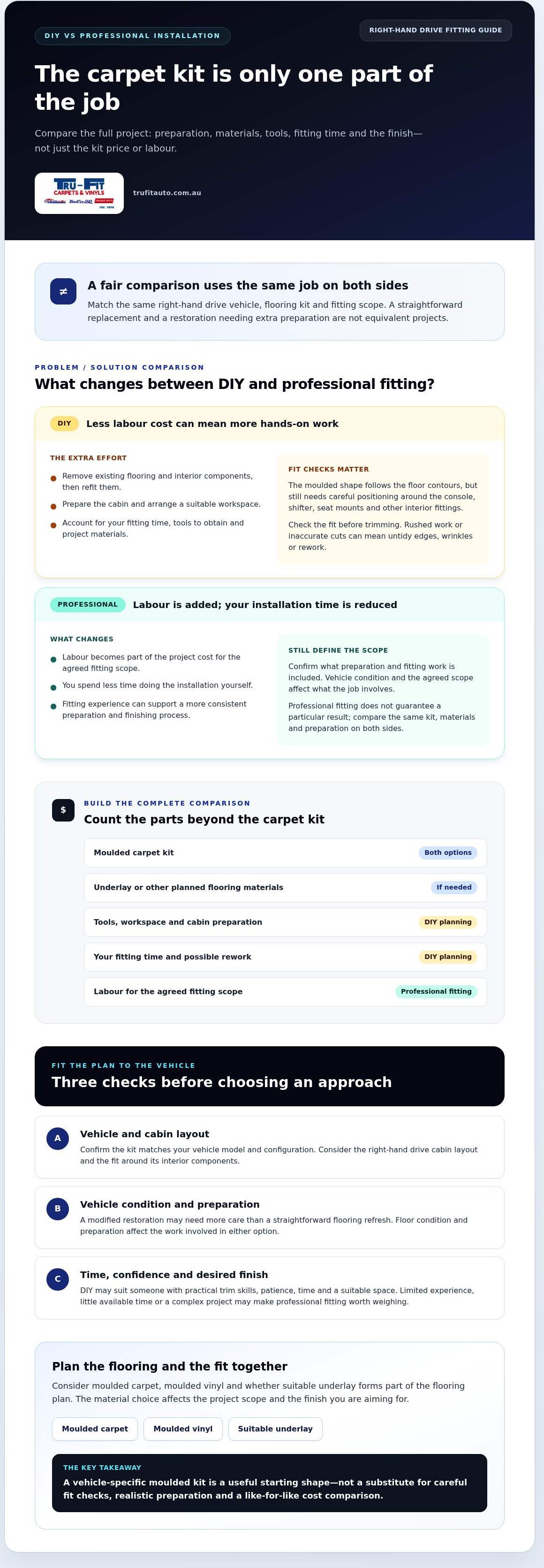
A useful comparison puts the same right-hand drive vehicle and the same flooring job on both sides. Don’t compare the price of a moulded carpet kit with a fitted result that includes labour and extra preparation. Write down the project scope first, then separate product costs from estimated fitting and incidental expenses.
Use this checklist to map the two approaches without relying on a generic estimate:
Keep each item distinct. Your time may not appear as a cash expense, but it is still part of the commitment. Likewise, don’t count tools as a new expense if you already own suitable ones, but include them if you need to obtain them for this job.
The condition of the existing carpet and floor affects how much preparation the project may require. A worn but straightforward interior can involve different work from a restoration where the floor or cabin has been altered. The vehicle’s right-hand drive layout and specific interior details also shape the fitting plan.
Your experience, available time and access to a suitable work area influence the DIY side. Rework is a possibility to allow for, not a fixed expense or an inevitable outcome. Include it as a contingency rather than treating it as a known cost.
Compare like-for-like project scope, not a kit price against a fitted result. This makes the DIY moulded carpet vs professional installation cost comparison more useful, because it shows what each option includes and where effort or expense may vary.
To plan the product component, explore moulded carpet flooring from Tru-Fit Automotive Products before setting out the full project scope.
Base the decision on four factors: the time you can set aside, your confidence with careful fitting work, the vehicle’s condition and the finish you expect. DIY may suit a straightforward project if you’re comfortable working methodically. If the interior needs substantial preparation, has been modified or is part of a detailed restoration, weigh the hands-on effort against the labour involved in professional fitting.
Keep right-hand drive fitment central to your plan. The cabin layout and vehicle-specific details matter when selecting flooring and considering how it will sit in the vehicle. Don’t assume a kit for a different layout or application will fit. Check the product details against your vehicle before planning the work.
If your project is a carpet replacement, start with moulded carpet flooring suited to the vehicle application. Moulded vinyl is a separate flooring option, so consider it on its own merits rather than assuming it will perform or feel like carpet. Underlay may form part of the flooring plan, while custom-fit floormats can be considered as a separate interior addition. Under-bonnet insulation is another distinct project item, not part of cabin carpet fitting.
Keeping the scope clear helps you compare fitting approaches fairly. Decide which flooring components you’re replacing and what finish you want before estimating the work involved.
Tru-Fit Carpets by Vision Auto supplies moulded carpet and vinyl flooring, along with related automotive flooring options for right-hand drive vehicles. Explore the moulded carpet flooring from Tru-Fit Carpets by Vision Auto range as you plan the product side of your project.
The best DIY moulded carpet vs professional installation cost comparison accounts for the flooring product, fitting effort and your vehicle’s requirements. Choose the approach that fits your available time and skills, then plan the project around the finish you want to achieve.
The right choice depends on more than the kit. Compare the full project scope, including preparation, tools, fitting labour and the time you can commit. Then weigh your confidence and the vehicle’s condition against the finish you want. This gives you a practical basis for deciding whether DIY suits your right-hand drive vehicle or professional fitting better matches the project.
A moulded carpet kit is one part of the plan. Tru-Fit Automotive Products specialises in custom-fit automotive flooring, with moulded carpet, moulded vinyl, custom-fit floor mats and underlay among its options. Keep the material and vehicle application in view as you finalise your project requirements.
Use the DIY moulded carpet vs professional installation cost comparison to make an informed decision, then explore moulded carpet flooring from Tru-Fit Automotive Products for your vehicle. A clear plan helps you choose an approach that suits your skills, schedule and desired result.
DIY can cost less in labour, but it isn’t automatically the lower-cost option overall. Include the moulded carpet kit, preparation materials, any tools you need, your time and possible rework in your comparison. Professional fitting adds labour but reduces the hands-on work you do. The DIY moulded carpet vs professional installation cost depends on the vehicle’s condition, project scope and your fitting experience.
There isn’t one reliable figure that applies to every Australian vehicle and carpet replacement. The total depends on the flooring kit, labour and the work required for that vehicle’s condition and project scope. For a useful comparison, separate the cost of the carpet from fitting labour and any additional preparation. Avoid comparing a kit price alone with a fitted result, as they cover different parts of the job.
Yes, you can fit a moulded carpet kit yourself if you have the time, practical confidence and a suitable workspace. Its moulded shape provides a starting form for the vehicle floor, but careful positioning and adjustment may still be needed. Include preparation and refitting interior components in your plan. If you’re unfamiliar with this type of work, consider whether you’re comfortable taking responsibility for the fit and finish.
The main cost factors are the carpet kit, underlay or other project materials, tools, fitting labour and preparation. The vehicle’s condition can change how much preparation is needed, while the project scope affects the work involved. DIY owners should also account for their time and allow for possible rework, without assuming it will be necessary. Compare the same vehicle and flooring area across both fitting approaches.
Moulded carpet is shaped for a vehicle application, but don’t assume every kit is made for a right-hand drive layout or will fit without adjustment. The vehicle’s specific interior and any changes from its original configuration can affect placement. Use the application details for your vehicle when selecting flooring, then plan for careful positioning. A moulded shape helps guide the fit, but doesn’t remove the need to assess it in the cabin.
It may be worth considering if the restoration has a complex interior, the existing floor needs substantial preparation or you want to limit your own fitting work. Professional labour adds to the project cost, while your time commitment is lower. DIY may suit a restoration if you have the skills, space and patience for careful fitting. Base the decision on the vehicle’s condition, your finish expectations and the full project scope.
 To Order Free Call 1800 335 896
 Cart


