Please fill in the fields to search in more detail.
What if new carpet hides damage that still needs attention? If you’re wondering how to treat floor pan surface rust before carpeting, don’t cover the metal until you’ve checked it. Rust can spread beneath flooring, especially if moisture is still entering the cabin or the steel has weakened.
Start by deciding whether the corrosion appears superficial or needs further assessment. Then clean and protect sound metal in the correct order, following the instructions for each product. This guide covers how to inspect the floor, remove loose rust, choose a suitable treatment and coating, and make sure everything is fully dry before refitting flooring.
It’s also important to find and address the source of any water before covering the floor. Once the pan is repaired as needed, protected and dry, you can compare right-hand-drive moulded carpet or vinyl flooring and suitable automotive underlay. New flooring should finish the job, not conceal unresolved rust or dampness.
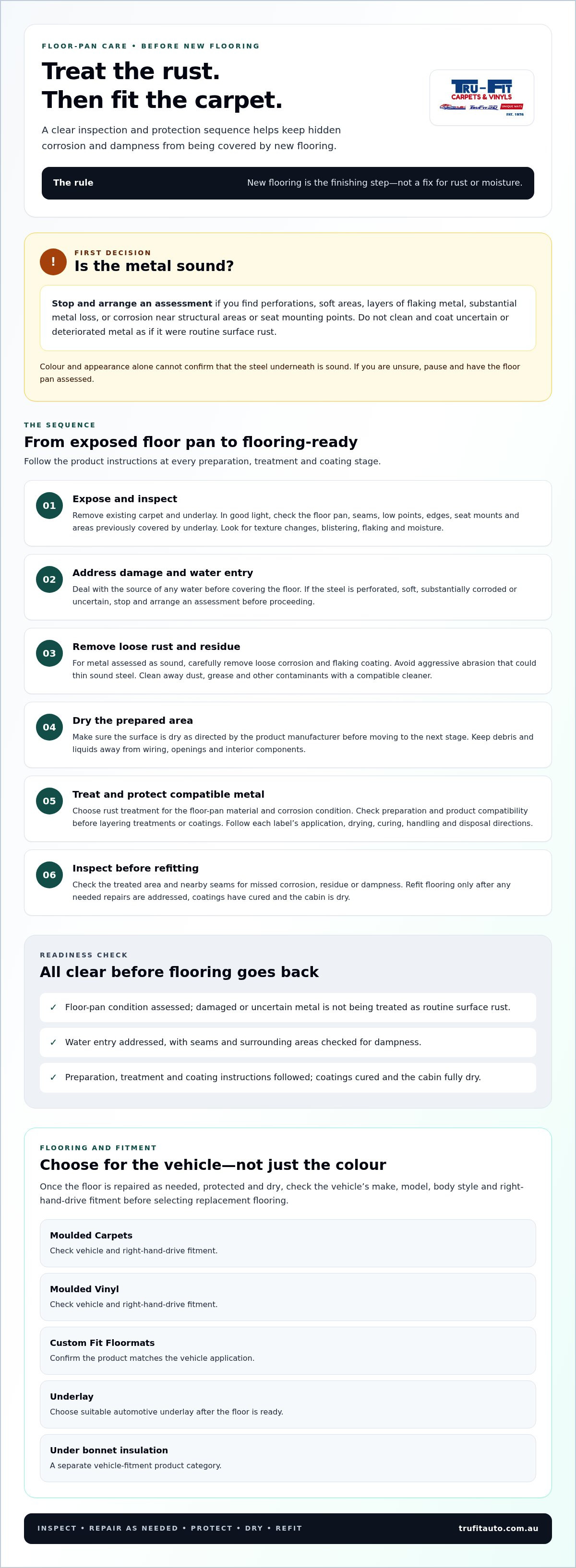
Use this order: inspect the exposed floor pan, address any metal damage and water entry, prepare and treat sound metal as directed, then refit flooring only after coatings have cured and the cabin is dry. If you find holes, soft areas or substantial metal loss, stop and arrange an assessment before cleaning or coating the area.
Before deciding how to treat floor pan surface rust before carpeting, check the metal’s condition. “Surface rust” describes corrosion that appears limited to the visible surface, but appearance alone can’t confirm the steel underneath is sound. New carpet may conceal corrosion or dampness without resolving either problem.
Remove the existing carpet and underlay so you can inspect the floor pan in good light. Check seams, low points where water may collect, floor edges, seat mounts and areas that were covered by underlay. Look for changes in texture, blistering, flaking and signs of moisture. Photograph affected areas before cleaning so you can compare them later. Reading about general automotive rustproofing methods can provide context, but it doesn’t replace checking the condition of your vehicle’s metal.
Surface rust may appear as orange-brown discolouration or a light, rough coating. Neither colour nor a small-looking patch confirms the steel underneath is sound. Check the surrounding metal too. Corrosion near seams, seat mounts and floor edges may have a different texture or show deterioration that is not obvious at first glance.
Superficial oxidation affects the surface; metal loss means the steel has deteriorated and may no longer be sound. If you can’t confidently tell which condition you’re seeing, pause and seek an assessment rather than relying on appearance alone.
Stop if you find perforations, layers of flaking metal, soft areas or substantial metal loss. Corrosion near structural areas or seat mounting points also needs qualified assessment. These are not routine carpet-preparation issues, and covering them with flooring won’t make the floor pan safe or sound.
Don’t treat uncertain or deteriorated metal as ready for cleaning and coating. Have the floor pan assessed before proceeding. Once its condition is understood, you can decide whether surface preparation is suitable or further work is needed from a qualified professional. New carpet belongs at the end of the process, after the floor is repaired as needed, protected and fully dry.
Once the floor pan has been assessed as sound, prepare it in a controlled sequence. Cleaners, rust treatments and coatings can require different surface conditions and may not be compatible. Read each label before starting, and use products only as directed.
Work methodically and avoid grinding or sanding sound steel unnecessarily. The aim is to remove loose corrosion, not to reshape or thin the floor pan. Choose cleaning methods that won’t leave residues or interfere with the selected treatment. The preparation stages in this guide to reviving a corroded frame offer useful context, but follow the instructions for products used on your floor pan.
Work in suitable ventilation and wear the protective equipment specified on product labels. Follow all handling and disposal directions. Don’t assume one product’s process applies to another. Check compatibility and preparation requirements before layering treatments or coatings.
Rust treatment can protect suitable metal, but it can’t restore metal already lost to corrosion. If the surface remains uncertain, stop and arrange an assessment. Don’t fit carpet over uncured coatings; observe the manufacturer’s stated drying and curing times. When the floor is ready for its finishing layer, explore right-hand-drive moulded carpet and vinyl flooring options from Tru-Fit Carpets by Vision Auto and confirm vehicle fitment.
A treated floor pan can still be at risk if water continues to enter the cabin. Find and address the source of dampness before refitting carpet or underlay. Flooring can hide wet areas, but it can’t stop a leak or resolve moisture trapped against the metal.
With the interior exposed, inspect the floor pan, seams and nearby areas for damp patches, water trails, residue and recurring wet spots. Check low points and areas beneath removed underlay. Depending on the vehicle, water may enter around glass, the cowl or heater-box area. Don’t assume the same leak source applies to every car.
If dampness returns after the area has been cleaned and dried, investigate further rather than covering it. If the entry point is hidden or you can’t identify it confidently, seek vehicle-specific advice. New underlay, including waterproof underlay, is not a substitute for stopping water from reaching the cabin.
Before fitting replacement flooring, check the floor pan and surrounding areas again. Make sure the protective coating has cured according to its manufacturer’s instructions, and check that seams and low points are dry. Remove loose debris and don’t reuse wet underlay beneath new carpet.
If rust reappears, moisture persists or you’re unsure about the metal’s condition, pause and arrange further assessment. Don’t let new flooring conceal a problem that still needs attention. Once the floor pan is sound, dry and ready, explore right-hand-drive moulded carpet, vinyl flooring and automotive underlay from Tru-Fit Automotive Products.
Replacement flooring is the finishing stage, not a rust-repair method. Move on only once the floor pan is sound, the moisture source has been addressed, and treatment coatings have cured according to their manufacturers’ instructions. That’s the final check in how to treat floor pan surface rust before carpeting: don’t let new flooring conceal an unresolved problem.
Before choosing a moulded floor covering, confirm the vehicle’s make, model, body style and right-hand-drive configuration. These details help you check whether the flooring is intended for your vehicle, including the shape and layout of its floor pan. Don’t assume a similar model or a left-hand-drive version will fit correctly.
Choose between moulded carpet and moulded vinyl based on your preference and intended vehicle use. Underlay is a separate flooring category to consider once the floor pan is prepared and dry. Check product information for details relevant to your vehicle and intended fitment.
Before fitting, review the vehicle-specific instructions and inspect the treated surface. The coating should be intact and fully cured, with no remaining dampness, loose debris or wet underlay beneath the flooring. Keep carpet, mats and underlay out of the cabin until these checks are complete.
If you’re not confident about fitting the flooring, seek appropriate fitting support. Tru-Fit Automotive Products supplies flooring products but does not provide installation services. Once you’ve confirmed your vehicle details, browse Tru-Fit Automotive Products’ automotive flooring, including right-hand-drive moulded carpet and vinyl options.
Good carpet preparation starts with the floor pan, not the flooring. Check whether the metal is sound, clean and protect it according to product instructions, and make sure any water entry has been addressed. If corrosion has caused metal loss or its condition is uncertain, get it assessed before covering it.
That’s the practical approach to how to treat floor pan surface rust before carpeting: treat suitable metal, allow coatings to cure, and refit flooring only when the interior is dry. Replacement carpet is the finishing step, not a way to hide rust or dampness.
Once you’ve confirmed your vehicle’s details and right-hand-drive fitment, explore Tru-Fit’s custom-fit moulded carpet and vinyl flooring options. Tru-Fit Automotive Products supplies flooring nationally across Australia. Browse Tru-Fit’s moulded automotive carpets and flooring and choose the right category for your vehicle. With the floor pan properly prepared, you can move ahead with greater confidence.
No. Don’t fit carpet over unresolved corrosion or dampness. First determine whether the rust is superficial and the metal remains sound. To treat floor pan surface rust before carpeting, prepare and protect sound metal according to the selected products’ instructions, then allow coatings to cure fully. If you find perforation, metal loss or uncertainty about the floor pan’s condition, stop and arrange an assessment before fitting flooring.
A visual inspection is a useful first check, but it can’t confirm the metal is sound. Look for loose flakes, holes, soft areas, substantial thinning and corrosion around seams or seat mounts. Don’t aggressively sand or cover the area if damage appears deeper than superficial oxidation or you can’t judge the metal’s condition. Ask a suitably qualified person to assess the floor pan before proceeding.
Preparation depends on the specific rust treatment. Some products require loose rust to be removed, while others specify different surface-preparation steps. Follow the product label and technical guidance rather than applying one method to every treatment. Remove contamination carefully, use the protective equipment and handling precautions stated by the manufacturer, and don’t coat metal that may need repair or professional assessment.
There’s no single drying or curing time that applies to every product and condition. Check the selected treatment and coating instructions for drying, recoat and cure requirements. Don’t refit carpet or underlay while the surface is damp, tacky or otherwise outside those instructions. Before covering the floor, confirm the coating has cured as specified and the cabin and surrounding areas are dry.
Yes. Rust can return if corrosion remains untreated, protective coatings are incomplete or moisture continues to enter the cabin. Carpet won’t stop a leak or repair damaged metal. Before refitting flooring, check for dampness around the floor pan and seams, address any identifiable water entry, and confirm the treated surface is dry and protected according to the coating manufacturer’s instructions.
Rust converters and primers have different purposes, and they aren’t interchangeable in every treatment system. The correct sequence depends on the products selected, their compatibility and the manufacturer’s preparation instructions. Follow the specified process rather than assuming every floor pan needs the same combination. If product compatibility is unclear, or the metal is damaged, pause and seek professional advice before applying further coatings or fitting carpet.
 To Order Free Call 1800 335 896
 Cart


