Please fill in the fields to search in more detail.
A waterproof layer can help protect replacement flooring, but it won’t stop water getting into your vehicle. If you’ve found dampness beneath the carpet in a right-hand-drive vehicle, fitting waterproof automotive underlay before tracing the source could leave the underlying problem unresolved.
Start by finding and addressing the water entry, then make sure the floor is dry before refitting the flooring. This guide covers practical ways to track down moisture, prepare the floor and choose underlay for your vehicle and its use.
Tru-Fit’s flexible rubber-compound underlay doesn’t absorb water and can be wiped dry. It’s suitable for use beneath moulded carpet, moulded vinyl flooring and mats, and has sound-absorbing qualities. Understanding how these properties fit into your flooring plan can help you choose materials for a right-hand-drive vehicle.
Damp flooring is a symptom, not a diagnosis. Waterproof automotive underlay can help protect flooring, but it isn’t a repair for a leak or a seal in the vehicle body. Before planning replacement flooring for your right-hand-drive vehicle, find out whether water is still entering the cabin.
Use a simple moisture log to look for patterns instead of guessing at the cause:
Keep the driver’s and passenger’s sides distinct in your notes. A consistent record of where and when moisture appears is more useful than replacing flooring based on a single inspection.
Don’t fit new carpet, vinyl or underlay over a wet or unexplained area. Water can remain in the existing carpet, underlay or on the floor even when the top feels dry. Dry what you can access and check for fresh moisture before planning the refit. If dampness returns, address the water entry before continuing.
Address the water source before refitting flooring, or moisture may remain trapped beneath the replacement materials.
Automotive underlay sits between the vehicle floor and the finished flooring. It forms a layer beneath materials such as moulded carpet, moulded vinyl and mats. It isn’t a waterproof seal for the vehicle body, doors or windows, and it can’t stop water entering the cabin. For a right-hand-drive flooring project, treat underlay as part of the flooring system, not as a substitute for finding the source of water ingress.
Underlay manages moisture at the flooring layer. Only addressing the entry point can stop water getting into the vehicle.
Tru-Fit’s waterproof automotive underlay is made from a flexible rubber compound. It doesn’t absorb water, can be wiped dry, and is not affected by water, oil or petrol. It is also described as resistant to rot and mildew. These properties apply to the underlay material itself. They don’t identify where moisture is coming from or repair a leak in the vehicle.
The underlay is intended for use beneath moulded carpet, moulded vinyl flooring and mats. Tru-Fit lists it in rolls measuring 1500 x 1000 mm, with a thickness of 6 mm. Use these specifications when planning the flooring layers, but don’t assume one roll will suit every floor layout.
The underlay also has sound-absorbing qualities. Consider this feature alongside your flooring choice, but don’t interpret it as a specific level of noise reduction. In a right-hand-drive vehicle, the underlay sits below the selected flooring or mat. The flooring still needs to suit the vehicle’s floor contours and cabin layout.
Once the floor is dry and the water source has been addressed, compare the options for your project. Tru-Fit waterproof underlay can be used beneath moulded carpet, moulded vinyl or mats as part of your flooring plan.
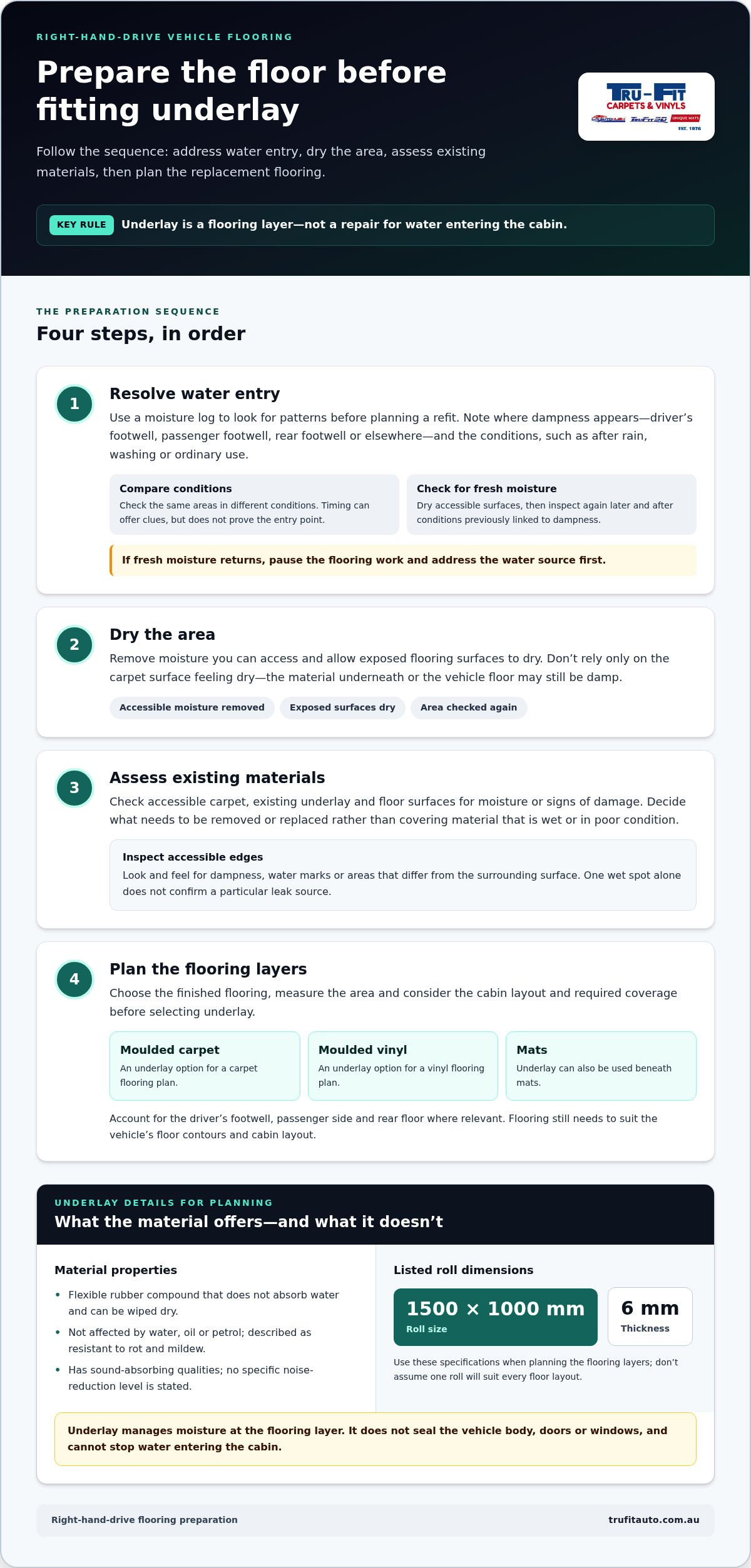
Prepare the floor before choosing or refitting materials. A waterproof layer won’t resolve water entry, and covering damp carpet, existing underlay or floor surfaces can trap moisture out of sight. Follow these steps in order for a right-hand-drive car, ute, 4WD or truck.
After drying, inspect the accessible floor and material edges again. If fresh water appears, investigate the source rather than changing the underlay choice. Keep the decisions separate: first establish that the area is dry and water entry has been addressed, then select the flooring layers. This helps prevent a new floor covering from hiding continuing dampness.
For a right-hand-drive vehicle, account for the cabin layout, including the driver’s footwell, passenger side and rear floor where relevant. Waterproof underlay can be used beneath moulded carpet, moulded vinyl flooring and mats, but one layout or amount won’t suit every vehicle. Measure the intended coverage and plan around the floor contours and flooring shape.
Before refitting, confirm the water entry is addressed, the floor and existing materials are dry, and your chosen flooring and underlay are planned for the area to be covered.
Once those checks are complete, choose Tru-Fit waterproof automotive underlay as a layer beneath suitable flooring for your project.
Choose flooring to suit the vehicle, the area to be covered and how it’s used. In a right-hand-drive passenger vehicle, moulded carpet or vinyl can suit the cabin floor, while custom fit floor mats cover specific areas. Under-bonnet insulation is a separate product for a different part of the vehicle, not a cabin flooring layer.
Use this comparison to organise your project, not to rank one flooring type above another. Coverage and shape depend on the vehicle and the area you intend to floor.
| Flooring option | Project consideration | Where underlay fits |
|---|---|---|
| Moulded carpet | Consider it for a carpeted cabin floor in a right-hand-drive car, ute, 4WD or truck. | Waterproof underlay can sit beneath the moulded carpet. |
| Moulded vinyl | Consider it for a vinyl-floored interior, planning around the floor shape and intended coverage. | Waterproof underlay can sit beneath the moulded vinyl flooring. |
| Custom fit floor mats | Plan for the specific floor areas the mats will cover, rather than treating them as full-floor replacement. | Underlay can be used beneath mats as part of the flooring arrangement. |
Tru-Fit’s underlay is not affected by water, oil or petrol. These stated properties may be relevant when planning flooring for a vehicle used in conditions where contact with those substances is a consideration. They don’t establish where water is entering or make the flooring combination a leak repair.
With more than 40 years of automotive carpet manufacturing experience, Tru-Fit offers Waterproof Underlay alongside moulded carpet and moulded vinyl flooring for right-hand-drive passenger and commercial vehicle projects. Consider under-bonnet insulation separately from cabin flooring when planning materials for your vehicle. Measure the intended flooring area and plan its shape and coverage.
Compare options for your project as you browse Tru-Fit automotive flooring products.
Turn your flooring decision into a clear project plan. Note the vehicle model, right-hand-drive layout and areas you want to cover. Consider boot or cargo areas separately if they have different requirements. This gives you a practical starting point for comparing materials and coverage instead of choosing on appearance alone.
Then consider how the vehicle is used and the finish you want in each area. Moulded carpet, moulded vinyl and mats offer different options, so focus on the fit and coverage your project needs. Include waterproof automotive underlay in your plan as a flooring component, and match the layers to the vehicle once the floor is ready.
Tru-Fit’s range focuses on right-hand-drive vehicle flooring. Explore the available options and take the next step towards a well-planned replacement with Explore Tru-Fit waterproof underlay and automotive flooring.
No. Waterproof automotive underlay sits beneath the flooring; it doesn’t seal the vehicle or repair the source of water entry. Its role is to protect the flooring layer, not make the cabin watertight. Locate and address the leak before fitting replacement materials. Tru-Fit underlay doesn’t absorb water and can be wiped dry, but those material properties don’t stop water from entering your vehicle.
Yes. Tru-Fit’s underlay is suitable for use beneath moulded carpet, making it an option for a right-hand-drive flooring project. It’s made from a flexible rubber compound and doesn’t absorb water. Use it only after the carpeted area is dry and any water entry has been addressed. Check beneath the front footwell carpet as well as the exposed surface before planning a refit.
Yes. Tru-Fit’s waterproof underlay is suitable for use beneath moulded vinyl flooring, as well as carpet and mats. That doesn’t mean every underlay layout will suit every vehicle or flooring kit. For a right-hand-drive vehicle, plan around the actual floor shape and intended coverage. Before refitting vinyl, address water entry and check the area so the new flooring isn’t laid over lingering moisture.
Tru-Fit’s rubber-compound underlay doesn’t absorb water and can be wiped dry. It is also not affected by water, oil or petrol, and is described as resistant to rot and mildew. These are material properties, not evidence that the vehicle interior is watertight. Moisture elsewhere in the carpet or floor still needs attention.
Tru-Fit lists Waterproof Underlay in rolls measuring 1500 x 1000 mm, with a stated thickness of 6 mm. Use those dimensions when planning the area beneath carpet, vinyl or mats. Measure the relevant floor surfaces and consider their shape before selecting underlay. The listed dimensions alone don’t establish how much material a particular vehicle project requires.
No. Don’t cover damp carpet, existing underlay or floor surfaces with new material. First address the water source, then dry accessible areas and check them again for fresh moisture before refitting. If the carpet feels dry but the exposed floor beneath it remains damp, wait until the area is dry before proceeding. Underlay won’t conceal moisture or resolve an active leak.
 To Order Free Call 1800 335 896
 Cart


