Please fill in the fields to search in more detail.
Is that lingering musty smell in your cabin just a sign of a messy weekend, or is it a warning that your vehicle's floorpan is at risk? Many owners assume a quick vacuum or a bottle of shampoo can fix years of wear, but sometimes a deep clean simply isn't enough. Knowing exactly when to replace car carpet is essential for protecting your car's interior and maintaining its long-term value.
You likely take pride in keeping your ride in top condition, but persistent dampness or visible holes under the pedals are more than just cosmetic eyesores. We understand that a vehicle represents a significant investment, and the flooring is its first line of defence against corrosion and road noise. In this article, we'll help you identify the five critical warning signs of carpet failure. You will learn how to spot "heel wear" and understand when a full replacement with a moulded carpet kit is the only way to ensure your floorpan stays rust-free and your cabin remains comfortable.
Determining exactly when to replace car carpet involves looking beyond the surface layer of dust and dirt. Many vehicle owners assume that a deep clean can fix any interior issue, but this approach fails to account for structural degradation. While synthetic fibres are durable, they eventually succumb to mechanical wear and chemical breakdown. Once the pile thins or the backing loses its shape, the carpet can no longer protect the metal floorpan from moisture and heat.
Several signs indicate that your flooring has reached the end of its functional life:
The driver's footwell is the most high-traffic area in any vehicle. Over time, the constant pivot of your foot between the accelerator and brake creates deep indentations or actual holes. This "heel wear" exposes the underlay and floorpan to dirt and moisture. Don't rely on a floor mat to hide this damage. If the carpet underneath is worn through, the mat will lack a stable surface to grip. This often causes the mat to slide forward, which can jam under the pedals during hard braking.
Australia’s extreme UV levels are a primary cause of interior deterioration. Prolonged exposure to the sun turns vibrant black or blue carpets into a brittle, chalky grey. This fading is a sign that the plastic polymers in the carpet are breaking down. As the material becomes brittle, it loses its ability to absorb sound and starts to crack or shed fibres. Replacing sun-damaged carpet is one of the most effective ways to instantly improve a vehicle's cabin feel and protect its long-term resale value.
The most dangerous signs of automotive flooring failure are often the ones you can't see. While the top layer of your interior might look relatively clean, a biological disaster could be unfolding beneath your feet. Underlay rot occurs when the organic or open-cell padding beneath your carpet traps moisture from spills, window leaks, or wet shoes. Because modern synthetic carpet fibres are essentially plastic, they don't rot themselves. Instead, they act as a non-breathable barrier that keeps the padding damp for weeks or even months. This dark, stagnant environment is where mold and mildew thrive.
You might notice a persistent, earthy smell that worsens on hot days. This "scent of mildew" is a definitive trigger for immediate action. Once these odours settle into the padding, no amount of surface scrubbing or deodorising spray will remove them. Understanding when to replace car carpet involves recognising that the carpet and its underlay are a single system; if the bottom layer is compromised, the entire unit must go.
Ignoring a damp cabin isn't just an aesthetic choice. It's a genuine health concern. Molds have the potential to cause health problems ranging from allergic reactions to respiratory distress, which are amplified in the confined space of a vehicle. When you operate the climate control system, these spores circulate throughout the cabin. Simply cleaning the surface of the carpet does nothing to address the bacteria colonies living in the saturated padding. You must identify the source of the moisture, such as a perished door seal or a blocked sunroof drain, before committing to a new interior. If the smell remains after the cabin has dried, it's time to consider a full replacement.
For owners of classic cars or high-kilometre daily drivers, the floorpan is a critical structural component. Old, sodden underlay acts as a permanent wet sponge pressed against the metal, stripping away factory coatings and inviting rapid oxidation. The cost difference between a new carpet kit and professional rust repair involving cutting and welding is substantial. A full strip-down of the interior is the only way to accurately inspect the steel for structural damage. If you discover surface rust or damp insulation during an inspection, it is the ideal time to upgrade to moulded carpet flooring that includes fresh, high-quality underlay. Taking action early prevents a minor leak from turning into a major structural failure.
Australia’s harsh climate presents unique challenges that standard automotive interiors aren't always designed to handle. High heat cycles are a primary factor in material degradation. In regions like Pakenham, summer cabin temperatures can soar, causing factory adhesives to break down and the carpet backing to become brittle. This heat-induced stress leads to the carpet pulling away from the floorpan contours, which eventually causes bunching and safety issues near the pedals. Knowing when to replace car carpet often comes down to assessing these environmental impacts before they lead to structural failure.
Off-road adventures and river crossings introduce another level of risk. If you’ve taken your 4x4 through deep water or thick mud, the carpet system is often the first thing to suffer. Silt and organic matter from river water permeate the underlay, creating a "biological disaster" that is almost impossible to clean. This trapped moisture significantly increases the health risks of mold exposure for everyone in the cabin. Once mud has dried inside the underlay, it acts as a permanent source of dust and odours that no vacuum can reach.
Coastal living is particularly hard on vehicle interiors. Fine grains of beach sand act like sandpaper against the base of the carpet pile. Every time you get in and out of the car, your weight grinds these abrasive particles into the backing, eventually shearing the fibres at the root. Salt crystals are equally destructive. Once salt-laden air or water permeates the carpet, it draws moisture from the atmosphere, keeping the floorpan perpetually damp. This accelerated corrosion is why coastal vehicles often require new flooring much earlier than those in inland areas.
For heavy-duty work utes and trade vehicles, the cabin floor is a high-impact zone. Industrial spills, heavy work boots, and dropped tools can tear through standard carpet in a matter of months. If your carpet is constantly covered in grease or site mud, it might be time to move away from fabric altogether. Many owners find that switching to a more durable material is the most practical solution. Check out our moulded vinyl flooring options if you need a surface that can be hosed out or wiped down after a long day on the job. Moulded vinyl provides the same precise fit as carpet but offers superior resistance to the chemicals and debris found on Australian worksites.
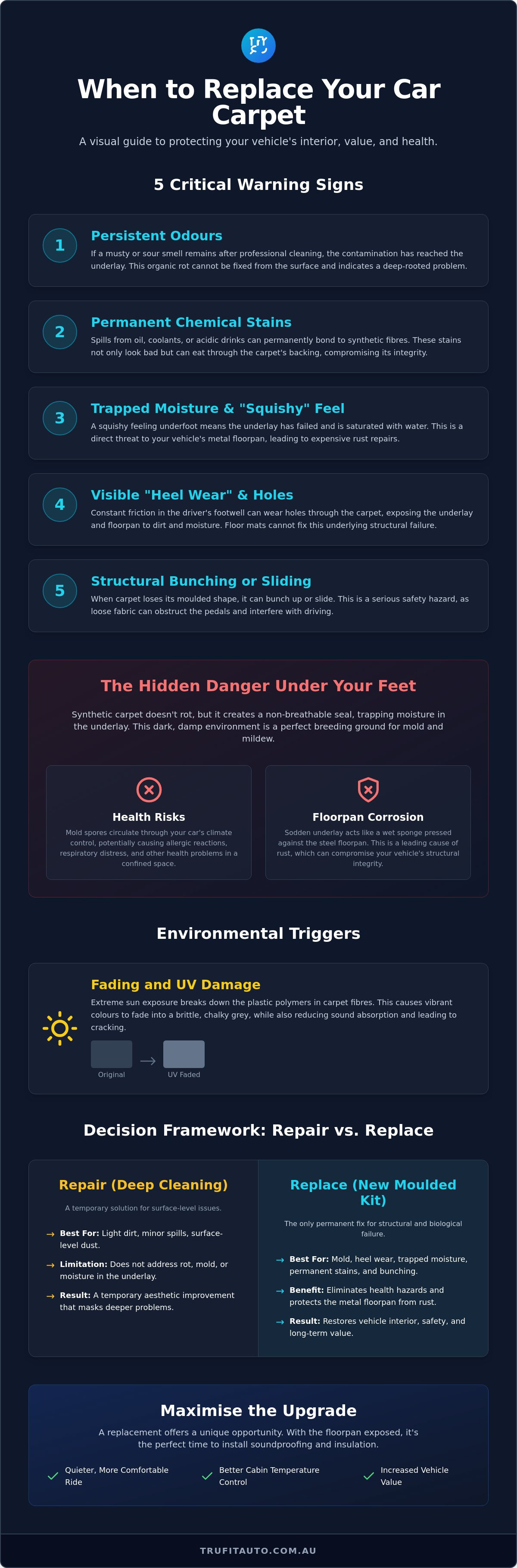
Deciding between a professional detail and a full replacement is a matter of calculating long-term value. While a deep clean might temporarily improve the appearance of your interior, it often fails to address the underlying structural and biological issues mentioned in previous sections. A professional detail can cost hundreds of dollars. Yet, it won't fix a thinning pile or a crushed underlay. In contrast, a high-quality moulded kit provides a total reset for your vehicle's flooring.
Longevity is the most significant differentiator. A new carpet kit typically adds 10 to 15 years of life to your interior. A cleaning session, no matter how thorough, only adds months before the old odours or stains resurface. When considering when to replace car carpet, look at the "band-aid" solutions like universal mats. These products rarely fit the transmission tunnel or sills correctly. They slide and bunch, creating the safety hazards discussed earlier. For DIY restorers, the time required to install a pre-moulded kit is often less than the time spent scrubbing decades of grime out of an unrecoverable factory floor.
Some damage is permanent. Bonded stains from industrial oils, paints, or certain chemical spills become part of the synthetic fibre's molecular structure. Scrubbing these areas often leads to "crunchy carpet" syndrome, where dried soap residue and damaged fibres create a stiff, uncomfortable texture. This residue actually attracts dirt faster than before. Repeated steam cleaning is another trap. It pushes moisture deep into the padding, which accelerates the underlay rot and floorpan corrosion we have already identified as critical failure points.
A pre-moulded fit is vastly superior to using "cut and shut" carpet rolls. Our kits are engineered to match the specific floorpan contours of your vehicle, ensuring the fabric sits flat against every curve and corner. This precision isn't just about looks; it prevents the carpet from shifting under heavy use. For those restoring a classic car, a fresh interior significantly increases market value. Buyers recognise the effort of a full strip-down and replacement. Beyond the financial gain, the psychological benefit of a clean environment and that genuine "new car smell" makes every drive more enjoyable. If your current flooring is showing any of the five warning signs, it is time to invest in moulded carpet flooring rather than wasting more money on temporary fixes.
Once you have identified the warning signs and decided when to replace car carpet, you have a unique opportunity to improve your vehicle's foundation. Removing the old flooring and seats exposes the bare metal floorpan. This is the only time you can easily access every contour of the cabin floor without obstruction. Installing sound deadening and thermal insulation at this stage is a strategic move that transforms a simple restoration into a comprehensive cabin upgrade.
Standard factory underlay provides basic padding, but it often lacks the density required to block modern road noise. Upgrading to premium acoustic insulation creates a multi-layer barrier that absorbs vibrations and blocks external sounds. Tru-Fit Carpets by Vision Auto has a long-standing heritage in providing integrated flooring and insulation solutions. Our expertise ensures that every layer works in synergy to create a quieter, more refined driving environment. We understand that a vehicle's floor is the primary entry point for mechanical noise and road heat.
Modern sound deadening materials significantly change how a vehicle feels on the highway. By targeting the floorpan, you can effectively neutralise exhaust drone and tyre roar before they reach your ears. This upgrade is especially beneficial for older vehicles or 4x4s with aggressive tyre patterns. A quieter cabin reduces driver fatigue and allows for clearer conversations and better audio performance. Explore our automotive soundproofing range to find the right materials for your specific model.
Australian summers put extreme thermal stress on vehicle interiors. The transmission tunnel and floorpan act as conductors, radiating heat from the drivetrain directly into the cabin. Premium insulation acts as a thermal break, keeping the interior cooler and reducing the load on your air conditioning system. The Pakenham-manufactured kits from Tru-Fit Carpets by Vision Auto are designed specifically for these local conditions. We ensure that our moulded carpet and insulation work together to provide maximum protection against the harsh Australian sun and road heat. By choosing a complete solution, you ensure your vehicle remains comfortable and protected for another decade of service.
Identifying exactly when to replace car carpet is the final step in securing your vehicle’s longevity. Whether you are dealing with structural thinning in the footwell or the biological aftermath of an off-road river crossing, your flooring is a critical protective barrier. Taking action now prevents hidden floorpan corrosion and ensures your cabin remains a healthy, professional environment for every passenger.
Tru-Fit Carpets by Vision Auto has been at the forefront of automotive interiors, manufacturing in Pakenham since the 1970s. We offer custom-fit solutions for over 700 vehicle models using high-quality automotive grade materials. Our long-standing expertise guarantees a product that handles the unique stress of the Australian climate while maintaining a precise, moulded fit that "universal" alternatives simply cannot match.
Browse the Tru-Fit Carpets by Vision Auto range of custom moulded car carpets and invest in a total interior reset. We look forward to providing the technical expertise and historical reliability your vehicle deserves.
No, you should never install new carpet over an old layer. This practice traps moisture, dirt, and existing mold between the two materials, which significantly accelerates floorpan rust. It also creates a safety hazard by increasing the floor's thickness and potentially interfering with pedal operation. Always remove the old flooring to inspect the bare steel underneath for any signs of corrosion.
The total investment depends on whether you choose a DIY installation or a professional service. Industry data from 2026 suggests that replacement kits generally range between several hundred dollars, while professional labour can increase that cost depending on the vehicle's size. Investing in a high-quality kit is usually more cost-effective than repeated professional detailing of an unrecoverable interior.
A standard DIY installation typically takes between four and eight hours for a single-row or dual-row vehicle. This timeframe includes the removal of seats, seatbelts, and the old flooring, followed by the installation of the new kit. Because our kits are pre-formed to the floorpan's contours, the process is much faster than trying to fit flat carpet rolls from a local supplier.
Moulded vinyl is often the superior choice for heavy-duty 4x4s and work vehicles. While carpet offers better sound insulation, vinyl is completely waterproof and can be wiped clean after river crossings or muddy site visits. If you frequently deal with off-road debris, vinyl provides a durable, low-maintenance surface that won't trap persistent odours or moisture in the cabin.
Most installations only require basic hand tools found in a standard home garage. You will typically need a socket set or spanners to remove the seats and seatbelts, a screwdriver for the trim pieces, and a sharp utility knife for minor trimming. If you are also installing soundproofing, a small hand roller is helpful to ensure the adhesive sheets bond correctly to the metal floorpan.
Replacing the carpet and underlay is the most effective way to eliminate persistent cabin odours. Most musty smells originate from the organic padding underneath the carpet, which traps moisture and bacteria. By removing the contaminated material and cleaning the floorpan, you eliminate the source of the odour. Knowing when to replace car carpet is essential for maintaining a healthy and pleasant driving environment.
Modern automotive carpets are manufactured as a single large piece to ensure a seamless, professional fit. While the driver side often shows the most wear, replacing just one section isn't practical with moulded kits. A full replacement ensures colour consistency across the entire cabin. It also allows you to inspect the entire floorpan for hidden moisture or rust that might be spreading from other areas.
A floor mat is a removable accessory designed for surface protection, whereas a moulded carpet kit is the vehicle's actual flooring. Floor mats only cover a small portion of the footwell. A moulded kit provides wall-to-wall coverage, following every curve of the transmission tunnel and sills. You'll know when to replace car carpet if floor mats can no longer hide structural thinning or underlay rot.
 To Order Free Call 1800 335 896
 Cart
Cart


